Analysis of Ancient Greek Vase Painting: Evolution of Black-Figure and Red-Figure Styles"

Aug 11, 2025 By

The study of ancient Greek vase painting offers a fascinating window into the artistic and cultural evolution of classical antiquity. Among the most striking developments in this medium was the transition from black-figure to red-figure techniques, a shift that revolutionized visual storytelling and aesthetic expression. These styles, though distinct in execution, share an intimate connection that reveals much about the ingenuity of Greek artisans and their relentless pursuit of artistic refinement.

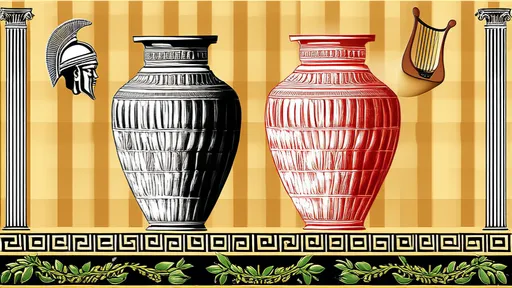
Black-figure pottery, which flourished from the 7th to the 5th century BCE, is characterized by its dark silhouettes against the natural reddish-orange clay background. Artists painted figures in black slip, using incised lines to add intricate details such as musculature, drapery, and facial expressions. This technique allowed for remarkable precision, particularly in the depiction of mythological scenes and heroic narratives. The mastery of black-figure painting is perhaps best exemplified by the works of Exekias, whose vases are celebrated for their dramatic compositions and emotional depth. Yet, despite its sophistication, the black-figure method had inherent limitations—chiefly, the difficulty of rendering fine details within the confines of the incised lines.

The advent of red-figure pottery in the late 6th century BCE marked a turning point in Greek ceramic art. This innovative technique reversed the color scheme: figures were left in the red hue of the clay, while the background was painted black. By using a brush to apply the slip, artists gained unprecedented control over line work, enabling them to create more fluid and dynamic representations of the human form. The red-figure style allowed for greater experimentation with perspective, anatomy, and movement, as seen in the works of pioneers like the Andokides Painter and later masters such as Euphronios. The increased versatility of this method opened new avenues for storytelling, with vases becoming canvases for complex scenes of daily life, athletic competitions, and divine interactions.

What makes the transition from black-figure to red-figure particularly intriguing is not just the technical advancement but also the cultural implications behind it. The shift coincided with a period of profound change in Greek society—the rise of democracy in Athens, the flourishing of philosophy, and a growing emphasis on individualism. These societal transformations were mirrored in the art, as red-figure painting placed greater emphasis on realism and the portrayal of human emotion. The figures on these vases no longer appeared as static silhouettes but as living, breathing entities engaged in dynamic action. This evolution reflects a broader artistic movement toward naturalism, one that would later influence Renaissance thinkers and beyond.

Despite the clear advantages of red-figure painting, black-figure techniques did not disappear entirely. Instead, the two styles often coexisted, with some artists blending elements of both in their work. Certain vase shapes and decorative motifs remained associated with black-figure traditions, particularly in religious and funerary contexts. This duality speaks to the enduring legacy of black-figure artistry, even as red-figure became the dominant form. Moreover, regional variations persisted, with workshops in different city-states developing their own distinctive approaches to both styles.

The study of these vase-painting techniques also sheds light on the practical aspects of ancient Greek craftsmanship. The firing process, for instance, was a delicate operation requiring precise control of temperature and oxygen levels to achieve the desired contrast between black and red. Potters and painters worked in close collaboration, often within the same workshop, to produce vessels that were both functional and aesthetically refined. The inscriptions found on many vases—whether signatures, dedications, or playful captions—further humanize these artifacts, offering glimpses into the lives of the artists and their patrons.

Today, the legacy of Greek vase painting endures not only in museums but also in contemporary art and design. The bold visual language of black-figure and red-figure compositions continues to inspire modern creators, while scholars remain captivated by the narratives these vessels preserve. From the epic tales of gods and heroes to the intimate scenes of ancient life, Greek vase painting serves as a timeless testament to the power of visual storytelling. The transition from black-figure to red-figure was not merely a technical innovation—it was a cultural milestone that redefined the boundaries of artistic expression.
Recommend Posts
Arts

Oil Painting Glazing Techniques: The Classical Mystery of Transparent Color Layers"

By /Aug 19, 2025

In the hushed galleries of museums, where centuries-old masterpieces whisper their secrets to those who listen closely, one technique has consistently defined the very soul of classical oil painting: glazing. The method, a delicate dance of transparent color over a meticulously prepared underpainting, is not merely a step in a process but the final breath of life given to a canvas. It is the difference between a flat image and a luminous window into another world, between simple pigment and captured light.
Arts

Interactive Installations for Children's Exhibitions: Interface Design for Gamified Learning"

By /Aug 11, 2025

In recent years, the intersection of technology and education has given rise to innovative approaches to engage young minds. Among these, interactive installations designed for children have emerged as a powerful tool, blending play with pedagogy. These installations are not merely flashy gadgets; they represent a thoughtful fusion of game mechanics and educational content, creating immersive environments where learning feels like an adventure.
Arts

Lighting Design for Sculpture Exhibitions: Control of Shadows on Three-Dimensional Forms

By /Aug 11, 2025

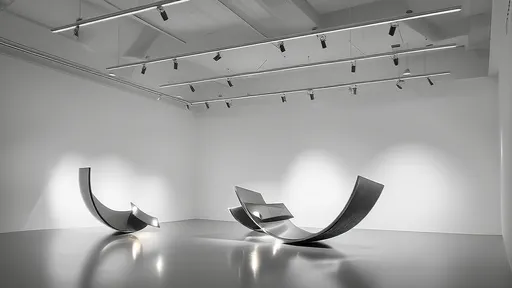
The interplay between light and shadow takes center stage in contemporary sculpture exhibitions, where lighting design transcends mere illumination to become an active participant in shaping spatial narratives. As curators and lighting designers collaborate to reveal the hidden dimensions of three-dimensional forms, shadow control emerges as both a technical challenge and an artistic opportunity. The current discourse in exhibition design increasingly recognizes how carefully modulated darkness can define volumes as powerfully as directed light.
Arts

Exhibition Hall Color Psychology: Visual Guidance of Wall Backgrounds

By /Aug 11, 2025

Walking into an exhibition hall, the first thing that strikes visitors isn’t always the artwork or products on display—it’s the colors surrounding them. The psychology of color in exhibition design plays a pivotal role in shaping perceptions, directing focus, and even influencing emotional responses. While curators often emphasize lighting and spatial arrangement, the backdrop—the walls themselves—acts as a silent yet powerful conductor of visual flow.
Arts

Narrative Architecture of Themed Exhibitions: From Academia to the General Public

By /Aug 11, 2025

In the world of cultural exhibitions, one of the most persistent challenges lies in transforming dense academic research into compelling narratives that resonate with diverse audiences. The delicate art of exhibition storytelling requires curators to serve as both scholars and translators, distilling complex ideas into accessible experiences without sacrificing intellectual depth.
Arts

African Tribal Sculpture: The Logic of Ritual Function in Form

By /Aug 11, 2025

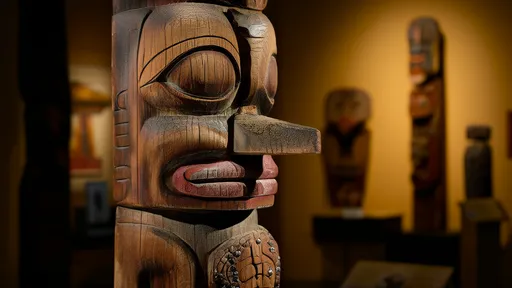
The enigmatic beauty of African tribal sculpture has long captivated collectors and scholars alike, yet its deeper ritual significance remains widely misunderstood in Western discourse. These are not mere aesthetic objects created for passive contemplation, but powerful vessels of spiritual energy shaped by cosmological principles that govern entire communities. From the dense forests of the Congo Basin to the arid Sahel, sculptural traditions manifest as physical articulations of invisible forces - what anthropologist Marcel Griaule termed "the spoken forms of the ancestors."
Arts

Dunhuang Feitian Posture Spectrum: A Millennium of Dance Movements' Mechanical Analysis

By /Aug 11, 2025

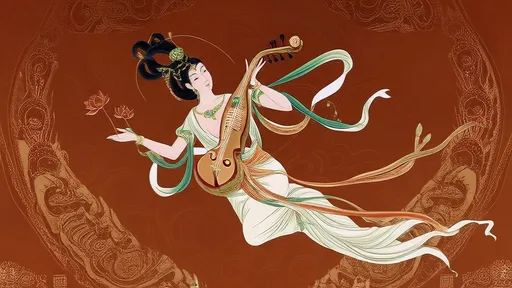
The ancient caves of Dunhuang, nestled along the Silk Road, have long been a treasure trove of Buddhist art, preserving centuries of cultural and spiritual expression. Among its most mesmerizing features are the celestial beings known as Feitian, or "flying apsaras," whose gravity-defying postures adorn the cave walls. A recent interdisciplinary study, Dunhuang Feitian Pose Spectrum: A Mechanical Analysis of Millennia-Old Dance Movements, delves into the biomechanics behind these ethereal figures, revealing how artists ingeniously captured motion and balance in static form.
Arts

Art Nouveau Jewelry: The Metal Interpretation of Natural Curves

By /Aug 11, 2025

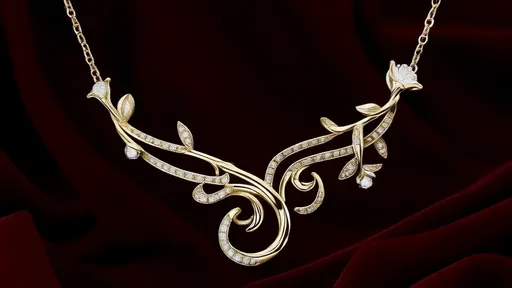
In the twilight of the 19th century, as industrialization stamped its rigid geometries across Europe, a rebellious artistic current emerged—one that worshipped the sinuous lines of nature rather than the machine's cold precision. Art Nouveau jewelry became the wearable manifesto of this movement, transforming precious metals and gemstones into fluid botanical fantasies that seemed to grow from the wearer's body rather than being crafted by human hands.
Arts

Northern Song Dynasty Landscape Paradigms: Decoding the Compositional Codes of the Three Masters"

By /Aug 11, 2025

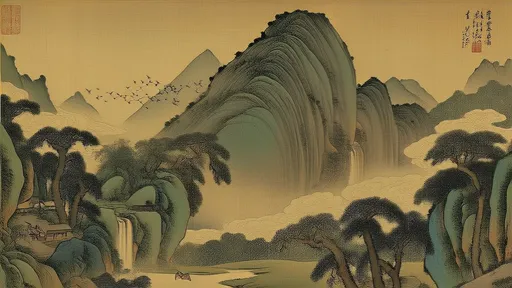
The Northern Song Dynasty (960–1127) represents a golden age in Chinese landscape painting, where artistic vision and philosophical depth converged to create enduring masterpieces. Among its many achievements, the era birthed what scholars now call the "Three Great Masters" – Li Cheng, Fan Kuan, and Guo Xi – whose works established compositional paradigms that would influence Chinese art for centuries. Their paintings weren't merely depictions of nature but visual manifestations of cosmological principles, where towering peaks and misty valleys embodied the harmony between heaven, earth, and humanity.
Arts

Analysis of Ancient Greek Vase Painting: Evolution of Black-Figure and Red-Figure Styles"

By /Aug 11, 2025

The study of ancient Greek vase painting offers a fascinating window into the artistic and cultural evolution of classical antiquity. Among the most striking developments in this medium was the transition from black-figure to red-figure techniques, a shift that revolutionized visual storytelling and aesthetic expression. These styles, though distinct in execution, share an intimate connection that reveals much about the ingenuity of Greek artisans and their relentless pursuit of artistic refinement.
Arts

Lacquerware Maki-e Craftsmanship: Precise Control of Gold Powder Sprinkling"

By /Aug 11, 2025

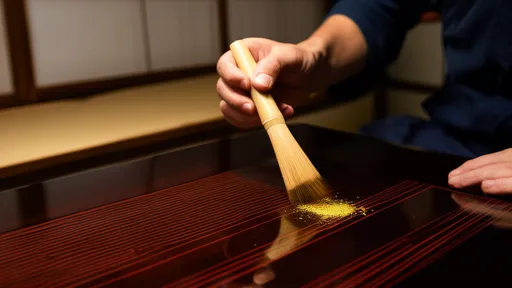
The ancient art of maki-e, or sprinkled picture, represents one of the most refined expressions of Japanese lacquerware. At its core lies the delicate interplay of lacquer and metal powders—primarily gold—to create intricate designs that shimmer with life. Among the many challenges faced by artisans, the precise control of gold powder dispersion stands as a defining factor between mediocrity and mastery. This centuries-old technique demands not only technical precision but also an almost spiritual connection to materials, where every gesture carries weight.
Arts

Glass Blowing Collaboration: The Art of Temperature in Master-Apprentice Coordination

By /Aug 11, 2025

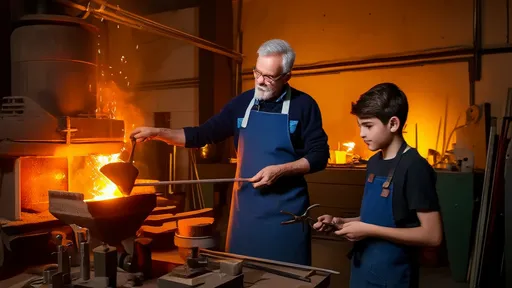
In the quiet glow of the furnace, where molten glass shimmers at 1200°C, an unspoken dialogue unfolds between master and apprentice. This is the realm of collaborative glassblowing—a dance of fire, timing, and trust that transforms glowing silica into delicate artistry. The craft, often misunderstood as solitary work, thrives on symbiotic partnerships where seasoned artisans and their protégés breathe life into form through synchronized movements and shared intuition.
Arts

Metal Welding Sculpture: The Aesthetics of Rebirth from Scrap Iron"

By /Aug 11, 2025

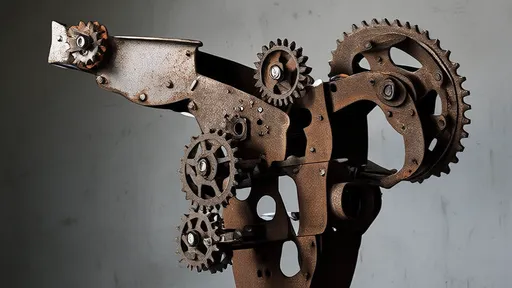
In the realm of contemporary art, few mediums capture the spirit of transformation as vividly as metal welding sculpture. What was once discarded as industrial waste—rusted gears, bent pipes, and shattered machine parts—finds new life under the torch of a welder’s hand. This art form, often overlooked in traditional galleries, thrives in the intersection of craftsmanship and environmental consciousness, where scrap iron is not merely recycled but reimagined.
Arts

Ceramic Coiling: A Contemporary Interpretation of Primitive Techniques"

By /Aug 11, 2025

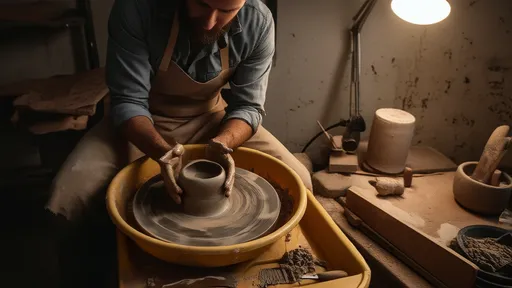
The art of pottery has been an integral part of human civilization for millennia, with techniques passed down through generations. Among these, the coiling method—building vessels by hand with rolled-out ropes of clay—stands as one of the oldest and most universal. Today, this ancient practice is experiencing a renaissance as modern artists and ceramicists reinterpret its possibilities, blending tradition with innovation.
Arts

Essential Techniques for Stone Carving: Unveiling the Process from Rough to Fine Sculpting"

By /Aug 11, 2025

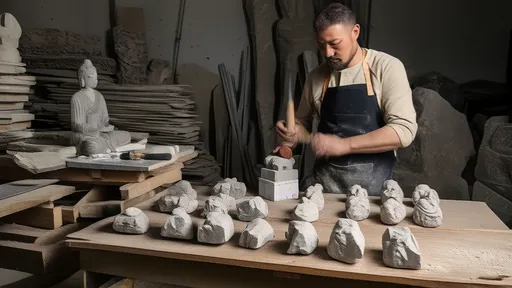
Stone carving, an ancient craft that has shaped human expression for millennia, remains one of the most demanding yet rewarding artistic disciplines. The transformation of a raw stone block into a polished masterpiece requires not only technical skill but also an intimate understanding of the material's soul. This process, often shrouded in mystery to outsiders, follows a meticulous progression from roughing out to fine detailing – each stage building upon the last with irreversible consequences.
Arts

Boneless Technique in Chinese Painting: Expressing Color Without Lines"

By /Aug 11, 2025

In the vast tapestry of Chinese artistic traditions, the boneless technique (mogu fa) stands as a mesmerizing departure from conventional ink-and-line painting. Unlike the rigid structures of meticulous brushwork or the bold strokes of calligraphic expression, this method embraces a fluid, almost poetic surrender to color and form. It is an art of suggestion rather than declaration, where pigments dance freely across silk or paper, unshackled by the confines of outlines.
Arts

Fresco Ground Layer Creation: The Millennia-Old Recipe for Plaster Bases"

By /Aug 11, 2025

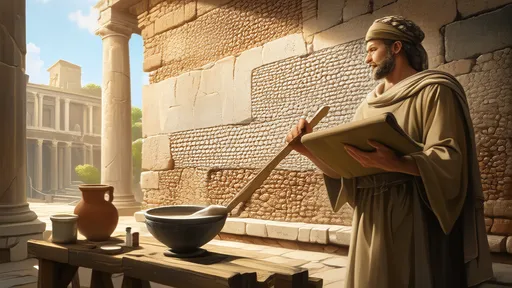
For centuries, the silent sentinels of history have watched over us from temple walls, cave ceilings, and palace corridors. These ancient murals, vibrant despite the passage of millennia, owe their longevity to an often-overlooked foundation: the humble plaster base known as dizhangceng in Chinese conservation terminology. This unassuming layer between wall and pigment holds secrets that modern science is only beginning to comprehend.
Arts

Pastel Fixative: Permanent Fixation of Powder Media"

By /Aug 11, 2025

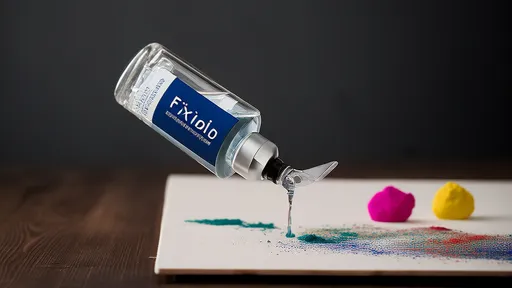
The world of fine art has always relied on innovative techniques to preserve the integrity of delicate mediums. Among these, pastel paintings present unique challenges due to their powdery nature. The development of specialized fixatives for pastel works represents a significant advancement in art conservation, allowing these vibrant creations to withstand the test of time while maintaining their distinctive texture and luminosity.
Arts

Aqueous Wet-on-Wet Technique: Controlling the Illusion of Reality in Watercolor Blending"

By /Aug 11, 2025

The art of watercolor painting is often celebrated for its fluidity and transparency, but few techniques capture its essence as beautifully as the wet-on-wet method. Wet-on-wet, or the practice of applying pigment to a damp surface, allows colors to blend organically, creating soft edges and luminous transitions. This approach is particularly revered for its ability to mimic the delicate interplay of light and shadow in nature. However, mastering this technique requires more than just a casual understanding of water and pigment—it demands a keen sense of timing, control, and an almost intuitive feel for how colors interact on paper.
Arts

Classical Reproduction of Indirect Oil Painting: Transparent Color Layers"

By /Aug 11, 2025

The art world has witnessed a resurgence of interest in traditional oil painting techniques, particularly the indirect method known as glazing. This layered approach, which dominated European painting from the Renaissance through the 19th century, creates luminous depth through successive transparent applications that modern direct painting often struggles to replicate. Contemporary artists are rediscovering how these historical techniques can solve contemporary aesthetic challenges while connecting them to centuries of artistic heritage.