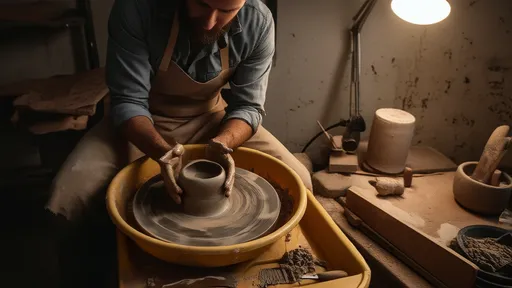
The art of pottery has been an integral part of human civilization for millennia, with techniques passed down through generations. Among these, the coiling method—building vessels by hand with rolled-out ropes of clay—stands as one of the oldest and most universal. Today, this ancient practice is experiencing a renaissance as modern artists and ceramicists reinterpret its possibilities, blending tradition with innovation.
Coiling, dates back to prehistoric times when early potters shaped functional vessels without the use of wheels or advanced tools. The simplicity of the technique belies its versatility; by stacking and joining coils, artisans could create forms ranging from sturdy cooking pots to delicate ritual objects. What makes coiling remarkable is its accessibility—requiring little more than clay, hands, and patience—yet it allows for astonishing complexity in design.
In contemporary ceramics, the coiling technique has transcended its utilitarian origins to become a medium for artistic expression. Modern practitioners are pushing boundaries, experimenting with scale, texture, and form in ways that challenge conventional perceptions of hand-built pottery. Some artists create monumental installations, while others focus on intricate, lace-like patterns achieved through meticulous coil placement. The organic, rhythmic quality of coiled work offers a stark contrast to the precision of wheel-thrown pieces, giving each creation a distinct, human touch.
The revival of interest in coiling reflects a broader trend in the arts—a return to handmade processes in an increasingly digital world. There’s a growing appreciation for the meditative, tactile nature of working with clay in this manner. Unlike industrial production or even wheel throwing, coiling demands a slower, more intentional approach. Each coil carries the maker’s fingerprints, both literally and metaphorically, resulting in pieces that feel deeply personal.
Contemporary ceramicists are also redefining what materials can be used alongside traditional clay coils. Some incorporate organic fibers, metals, or even recycled materials into their work, creating hybrid pieces that blur the line between craft and sculpture. Others play with the firing process, using alternative methods like pit firing or raku to achieve unexpected surface effects. These innovations demonstrate how an age-old technique can serve as a springboard for creative exploration.
Educational institutions and workshops worldwide have noted increased demand for classes focused on hand-building techniques like coiling. Students are drawn not only to the method’s historical significance but also to its potential for individual expression. Unlike wheel throwing, which requires mastering specific mechanical skills, coiling offers immediate gratification—beginners can create simple forms quickly while developing their unique style over time.
The aesthetic appeal of coiled pottery lies in its honest display of process. Visible coil marks, subtle asymmetries, and the occasional imperfection become virtues rather than flaws, celebrating the handmade quality that mass-produced items lack. This authenticity resonates with contemporary audiences seeking connections to traditional crafts in an era of homogenized design.
Looking forward, the coiling technique continues to evolve as artists from diverse cultural backgrounds bring their perspectives to this universal practice. From studio potters maintaining centuries-old traditions to avant-garde creators deconstructing the form, coiling remains a vibrant, living art form. Its endurance through millennia speaks to something fundamental in human creativity—the desire to shape our world with our hands, one coil at a time.
As galleries and collectors increasingly recognize the artistic value of hand-coiled works, what was once considered a primitive method now commands respect in high-end ceramic art markets. This shift underscores how contemporary makers are successfully bridging ancient craft and modern art, proving that some techniques never go out of style—they simply await reinterpretation by each new generation of artists.
By /Aug 19, 2025
By /Aug 11, 2025
By /Aug 11, 2025
By /Aug 11, 2025
By /Aug 11, 2025

By /Aug 11, 2025

By /Aug 11, 2025
By /Aug 11, 2025

By /Aug 11, 2025
By /Aug 11, 2025
By /Aug 11, 2025
By /Aug 11, 2025
By /Aug 11, 2025
By /Aug 11, 2025
By /Aug 11, 2025
By /Aug 11, 2025
By /Aug 11, 2025

By /Aug 11, 2025
By /Aug 11, 2025
By /Aug 11, 2025
