The art of watercolor painting is often celebrated for its fluidity and transparency, but few techniques capture its essence as beautifully as the wet-on-wet method. Wet-on-wet, or the practice of applying pigment to a damp surface, allows colors to blend organically, creating soft edges and luminous transitions. This approach is particularly revered for its ability to mimic the delicate interplay of light and shadow in nature. However, mastering this technique requires more than just a casual understanding of water and pigment—it demands a keen sense of timing, control, and an almost intuitive feel for how colors interact on paper.
At the heart of wet-on-wet painting lies the concept of water control. Unlike other mediums where the artist fights against drying times, watercolor thrives on it. The dampness of the paper becomes a collaborator, guiding the pigment into unexpected but often breathtaking patterns. Too much water, and the colors bleed uncontrollably, losing definition. Too little, and the magic of seamless blending vanishes. The key is to strike a balance where the paper is just wet enough to allow colors to mingle without drowning them. This delicate equilibrium is what separates a mediocre wash from a masterpiece.
One of the most captivating aspects of this technique is its ability to create ethereal gradients and subtle textures. When two colors meet on a wet surface, they don’t just mix—they dance. The pigments push and pull against one another, forming blooms, backruns, and cauliflowers (those fern-like patterns watercolorists either love or loathe). These "happy accidents," as they’re often called, aren’t entirely random. A skilled artist can anticipate and even manipulate them by adjusting the tilt of the paper, the consistency of the paint, or the humidity in the room. It’s this interplay between control and surrender that makes wet-on-wet so exhilarating.
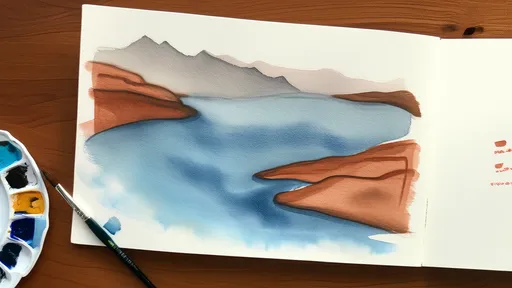
The emotional resonance of a well-executed wet-on-wet passage is undeniable. There’s a dreamlike quality to the way colors dissolve into one another, suggesting rather than dictating form. This is why the technique is so frequently employed in landscapes—skies, water, and distant foliage all benefit from that soft, diffused edge. But it’s not just for backgrounds. Contemporary artists are pushing boundaries by using wet-on-wet for portraits and abstract work, proving that this centuries-old method still has surprises to offer. The transparency of the medium allows for layering, so subsequent glazes can intensify hues without sacrificing luminosity.
Critics might argue that wet-on-wet lacks precision, but that misses the point entirely. The beauty of this approach lies in its unpredictability—the way it forces the artist to respond rather than dictate. It’s a conversation between creator and medium, one where both parties have a say in the final outcome. This requires not just technical skill but also a willingness to embrace imperfection. The most compelling wet-on-wet paintings often have moments of "loss," where edges disappear into washes, inviting the viewer to complete the image in their mind’s eye. In an age of digital perfection, there’s something profoundly human about that.
Materials play a crucial role in achieving successful wet-on-wet effects. Paper weight, texture, and sizing all influence how water behaves. Rough papers hold pools of pigment differently than hot-pressed surfaces, while absorbent papers can suck the life out of a wash if not handled properly. Pigment choice matters too—some colors granulate beautifully, separating into component hues as they dry, while others stain aggressively. And let’s not forget brushes: a thirsty mop brush can lift excess water, while a pointed round can deposit pigment with surgical precision when needed. The tools aren’t just passive implements; they’re active participants in the painting process.
Perhaps what makes wet-on-wet so enduringly popular is its accessibility. Beginners can achieve pleasing results early on, which encourages further exploration. Yet the technique has enough depth to challenge masters for a lifetime. Every painting becomes an experiment, a chance to discover how cerulean blue will react with burnt sienna on a damp winter morning versus a humid summer afternoon. There are always new variables, new reactions to observe. In this sense, wet-on-wet isn’t just a technique—it’s a lifelong pursuit, one that keeps watercolorists returning to their palettes with childlike wonder, no matter how many years they’ve been painting.
By /Aug 19, 2025

By /Aug 11, 2025
By /Aug 11, 2025
By /Aug 11, 2025

By /Aug 11, 2025
By /Aug 11, 2025

By /Aug 11, 2025
By /Aug 11, 2025
By /Aug 11, 2025
By /Aug 11, 2025
By /Aug 11, 2025
By /Aug 11, 2025

By /Aug 11, 2025
By /Aug 11, 2025
By /Aug 11, 2025
By /Aug 11, 2025
By /Aug 11, 2025
By /Aug 11, 2025
By /Aug 11, 2025
By /Aug 11, 2025
