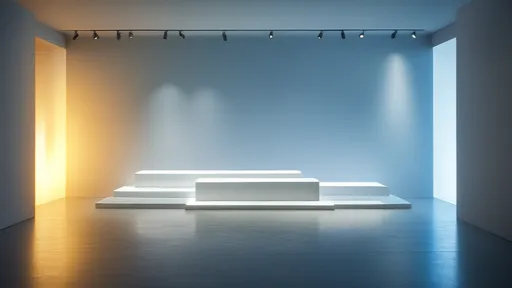
The interplay between light and shadow takes center stage in contemporary sculpture exhibitions, where lighting design transcends mere illumination to become an active participant in shaping spatial narratives. As curators and lighting designers collaborate to reveal the hidden dimensions of three-dimensional forms, shadow control emerges as both a technical challenge and an artistic opportunity. The current discourse in exhibition design increasingly recognizes how carefully modulated darkness can define volumes as powerfully as directed light.
Modern sculpture parks and gallery installations demonstrate a growing sophistication in shadow manipulation techniques. At the recent Venice Biennale Arte 2023, several pavilions showcased radical approaches to darkness as a positive design element rather than mere absence of light. One particularly striking bronze installation appeared to change its silhouette throughout the day as programmed LED arrays selectively highlighted different planes while allowing others to recede into calculated obscurity. This dynamic interplay created the illusion of kinetic movement in static objects.
The physics of shadow formation presents unique considerations when working with carved, cast or constructed three-dimensional artworks. Unlike two-dimensional pieces where lighting primarily concerns color temperature and even coverage, sculpture demands careful analysis of form, texture and viewing angles. Professional lighting designers now employ advanced 3D modeling software to simulate how shadows will fall across complex surfaces before installing a single fixture. These digital tools allow for precise prediction of how raking light will emphasize tool marks in stone or how backlighting might transform translucent resin into glowing forms.
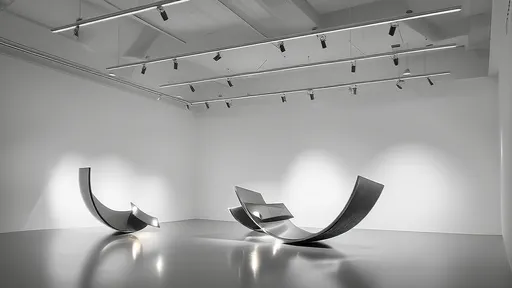
Material response to illumination remains a critical factor in exhibition lighting schemes. The same spotlight that makes polished marble vibrate with inner luminosity can reduce intricately carved wood to flat silhouettes if improperly positioned. Contemporary solutions often combine multiple light sources - diffused overhead washes for general visibility, focused spots for dramatic modeling, and strategically placed reflectors to fill in overly harsh shadows. The Tate Modern's recent Richard Serra exhibition demonstrated masterful control of these variables, using industrial-scale lighting to articulate the massive steel curves while maintaining crucial shadow definition that revealed their imposing mass.
Emerging technologies continue expanding possibilities for shadow manipulation in sculpture display. Programmable motorized fixtures can now follow visitors' movement around an installation, maintaining optimal shadow relationships from multiple viewpoints. Some experimental galleries employ responsive systems where the lighting dynamically adjusts based on real-time analysis of crowd density and movement patterns. These developments raise fascinating questions about whether shadow should be treated as an immutable property of the artwork or as a flexible element that changes with audience interaction.
Conservation concerns impose necessary limitations on lighting designs for sensitive materials. Paper sculptures, delicate textiles and light-sensitive pigments require careful balancing between visual impact and long-term preservation. Museum-grade LED systems with UV/IR filtration have become indispensable tools, allowing dramatic presentations without accelerating material degradation. The delicate dance between revelation and protection becomes particularly poignant when lighting ancient stone carvings, where modern technology must illuminate centuries-old surfaces without erasing the very patina of age that gives them historical value.
The psychological impact of sculptural shadows represents another dimension increasingly considered in exhibition design. Curators note how shadow patterns can create subliminal emotional cues - elongated shadows might evoke melancholy, while crisp geometric shadows could suggest precision and modernity. Some installations deliberately employ conflicting shadow directions to create visual tension, or use colored light sources to produce chromatic shadows that become sculptural elements in their own right. These techniques transform the exhibition space into an immersive environment where light and shadow perform as active collaborators with the physical artworks.
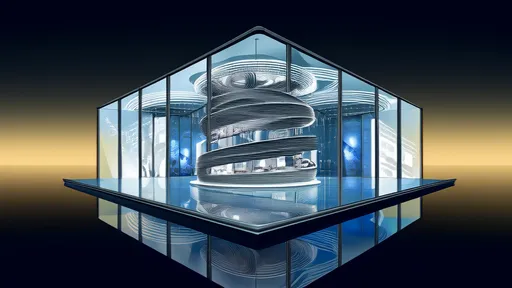
As the field progresses, lighting design for sculpture exhibitions continues breaking free from traditional conventions. The once rigid separation between architectural lighting and display lighting has blurred, with many designers now creating holistic luminous environments where the boundaries between artwork and exhibition space dissolve. This integrated approach recognizes that shadows cast by sculptures don't simply disappear at the base of plinths but interact with walls, floors and even viewers to create constantly evolving spatial compositions. The most forward-thinking exhibitions now consider shadow as a medium rather than a byproduct, opening new avenues for experiencing three-dimensional art in the twenty-first century.

By /Aug 19, 2025

By /Aug 11, 2025
By /Aug 11, 2025
By /Aug 11, 2025
By /Aug 11, 2025

By /Aug 11, 2025

By /Aug 11, 2025

By /Aug 11, 2025

By /Aug 11, 2025

By /Aug 11, 2025

By /Aug 11, 2025

By /Aug 11, 2025

By /Aug 11, 2025

By /Aug 11, 2025

By /Aug 11, 2025

By /Aug 11, 2025

By /Aug 11, 2025

By /Aug 11, 2025

By /Aug 11, 2025

By /Aug 11, 2025