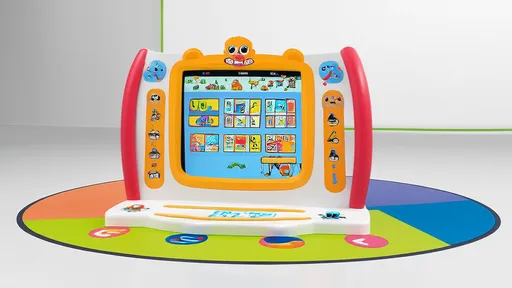
In recent years, the intersection of technology and education has given rise to innovative approaches to engage young minds. Among these, interactive installations designed for children have emerged as a powerful tool, blending play with pedagogy. These installations are not merely flashy gadgets; they represent a thoughtful fusion of game mechanics and educational content, creating immersive environments where learning feels like an adventure.
The philosophy behind these designs stems from the understanding that children learn best when they are actively involved and emotionally invested. Traditional methods often struggle to maintain attention, but gamified interfaces tap into natural curiosity and the desire for exploration. By incorporating elements such as touch-sensitive panels, motion sensors, and augmented reality, designers create multi-sensory experiences that make abstract concepts tangible.
Why does this approach work so effectively? The answer lies in the psychology of engagement. Games inherently provide feedback loops—immediate rewards for actions taken—which reinforce learning. When a child solves a puzzle or completes a challenge in an interactive installation, the system might respond with lights, sounds, or visual animations. This instant gratification not only boosts motivation but also solidifies the connection between action and outcome, a cornerstone of cognitive development.
One striking example is the use of interactive floors in museums. These installations transform passive observation into active participation. As children step on projected images of planets, for instance, they trigger information about each celestial body. The physical movement paired with visual and auditory feedback creates a memorable learning moment far more impactful than reading a static display.
Designing these interfaces requires a delicate balance. The technology must be robust enough to withstand enthusiastic little hands (and feet), yet intuitive enough that instructions become unnecessary. The most successful designs employ universal symbols, vibrant colors, and clear audio cues to guide users naturally through the experience. Complexity is hidden beneath layers of simplicity, allowing children to focus on discovery rather than mechanics.
The social dimension of these installations often gets overlooked but proves equally vital. Many setups encourage collaboration, whether through shared control panels or group challenges. This not only teaches subject matter but also nurtures teamwork and communication skills. In an era where screen time often means isolated activity, interactive installations bring children together in physical spaces to learn collectively.
Critics sometimes question whether the entertainment value overshadows educational substance. However, research indicates that the emotional resonance created by these playful interfaces leads to better information retention. When children associate learning with positive emotions, they develop lifelong curiosity rather than viewing education as a chore. The key lies in seamless integration—where the fun elements serve the educational objectives rather than distract from them.
Looking ahead, the potential for adaptive technologies promises even more personalized experiences. Imagine installations that adjust difficulty based on a child's responses or that incorporate biometric feedback to optimize engagement. As artificial intelligence and machine learning advance, so too will the sophistication of these educational tools. Yet the core principle remains unchanged: when learning feels like play, the mind opens willingly to new knowledge.
The evolution of children's interactive installations represents more than technological progress—it reflects a fundamental shift in how we approach early education. By honoring the natural ways children explore their world, these designs don't just teach facts; they cultivate the joy of learning itself. In classrooms, museums, and public spaces worldwide, these vibrant interfaces are quietly revolutionizing education, one playful interaction at a time.

By /Aug 19, 2025
By /Aug 11, 2025

By /Aug 11, 2025

By /Aug 11, 2025
By /Aug 11, 2025

By /Aug 11, 2025

By /Aug 11, 2025

By /Aug 11, 2025

By /Aug 11, 2025

By /Aug 11, 2025

By /Aug 11, 2025

By /Aug 11, 2025

By /Aug 11, 2025

By /Aug 11, 2025

By /Aug 11, 2025

By /Aug 11, 2025

By /Aug 11, 2025

By /Aug 11, 2025

By /Aug 11, 2025

By /Aug 11, 2025
